
Warm weather, wooded trails, and time outdoors are some of a dog’s favorite things. However, these enjoyable moments may also put them in contact with ticks. Spotting a tick crawling on your dog’s fur or already attached can be surprising, but staying calm and knowing how to remove a tick from a dog helps prevent accidental squeezing, twisting, or leaving mouthparts behind. This step-by-step guide walks you through what ticks are, where they hide, how to prepare for removal, and what to do afterward. Montgomery Veterinary Associates in Montgomery, AL, supports your efforts to keep your dog healthy year-round, including guidance on tick prevention and screenings. If you have concerns about ticks or want recommendations tailored to your pet’s needs, call us or book an appointment online today.
What You Should Know About Ticks
Ticks are small arachnids commonly found in grassy, wooded, and warm environments. They attach to animals and people to feed, and they can vary greatly in size depending on the species and how long they’ve been feeding. If you’re learning how to remove a tick from a dog, it helps to understand what they look like and how they behave. Some ticks are flat and tiny before feeding, while others can swell significantly once they have been attached for a while. Ticks prefer areas where they can remain hidden, including the ears, armpits, groin, and between toes. Regularly checking your dog after outdoor time is one of the best ways to reduce prolonged attachment.
Diseases Associated with Ticks
Ticks can transmit illnesses depending on the region and type of tick. These may include Lyme disease, ehrlichiosis, and other tick-borne conditions. Not every tick carries disease, and not every bite leads to infection, but awareness is important. Your veterinarian can discuss testing and prevention options suited to your dog’s lifestyle.
The Importance of Early Detection
When it comes to how to remove a tick from a dog, early detection is key. The longer a tick stays attached, the higher the likelihood of disease transmission. Checking your dog’s coat after hikes, backyard playtime, or visits to parks can help you find ticks sooner. Running your fingers slowly through your dog’s fur, feeling for small bumps, and looking in areas where skin folds or fur is dense can help you locate hidden ticks. This routine only takes a few minutes but supports your dog’s comfort and overall health.
Where Ticks Tend to Hide
Ticks prefer warm, protected areas. Look closely around:
- Ears, including inside the flap
- Under the collar
- Between front and back legs
- Under the tail
- Between the toes
If you find a small, dark bump that doesn’t brush away, take a closer look as it could be a tick.
Tools You’ll Want to Have on Hand
Having the right tools makes the process of how to remove a tick from a dog safer and more efficient. Before beginning, gather everything you’ll need so that once you start, you don’t have to pause.
Helpful Tick-Removal Supplies
- Fine-tipped tweezers or a tick removal tool
- Disposable gloves
- Paper towels
- A small sealable plastic bag or jar
- Mild soap and warm water
- A clean cloth or cotton pad
These items help you remove the tick properly and clean your dog’s skin afterward.
How to Remove a Tick from a Dog: Step-by-Step
Now that you’re ready to start, follow these steps carefully. Staying calm and moving slowly will help your dog remain relaxed, too. The key to how to remove a tick from a dog safely is avoiding twisting or squeezing the tick’s body.
- Position Yourself and Your Dog: Choose a calm location where your dog can stay still. If needed, have another person gently comfort or hold your dog to help reduce movement.
- Gently Expose the Tick: Part the fur around the tick so you can clearly see its body and the point where it attaches to your dog’s skin. Good visibility helps you remove it more precisely.
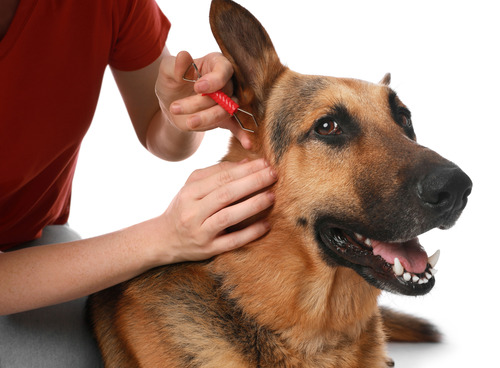
- Grasp the Tick Close to the Skin: Use tweezers or a removal tool to hold the tick at the point where its mouthparts meet your dog’s skin. Avoid grabbing the tick’s body, as squeezing it can cause internal contents to be pushed out.
- Pull Upward With Steady Pressure: Slowly lift the tick straight upward until it releases. Do not twist or jerk. It may take a moment for the tick to let go, so remain patient and steady.
- Check for Remaining Parts: Once removed, examine the area. If the mouthparts remain attached or you’re unsure whether the removal was complete, contact Montgomery Veterinary Associates for guidance.
- Save the Tick for Identification: Place the tick into a sealed bag or small jar. Your veterinarian may want to examine it or identify it, especially if your dog shows signs of illness later.
- Clean the Skin: Wipe the area with mild soap and warm water. Allow the area to air dry and monitor it over the next few days.
What to Watch for After Tick Removal
After you perform a tick removal, observing your dog over the following days is helpful. The skin where the tick was attached may appear slightly red or irritated temporarily. However, if the area worsens or your dog begins to act differently, contact Montgomery Veterinary Associates. Signs such as low energy, decreased appetite, or discomfort warrant a conversation with your veterinarian. Testing may be recommended based on your dog’s lifestyle and exposure history.
How Do I Keep My Dog Tick-Free?
Tick prevention is an ongoing process, particularly in regions like Montgomery, AL, where outdoor activity is common year-round. Your veterinarian can recommend parasite prevention products such as collars, topical solutions, or oral medications. Discussing your dog’s daily routine helps determine the best fit for them. Keeping your yard trimmed and avoiding tall brush can help lower the number of ticks your dog encounters during outdoor play.
Support for Your Dog’s Health and Wellness
Knowing how to remove a tick from a dog is a valuable skill, but professional veterinary guidance provides reassurance and ongoing protection. The team at Montgomery Veterinary Associates is here to support you with preventive care, screening, and personalized recommendations based on your dog’s lifestyle. If you’ve discovered a tick, have questions about prevention, or would like to schedule your dog’s next appointment, call us today or book an appointment online. Your dog’s comfort and well-being are always important to us.