

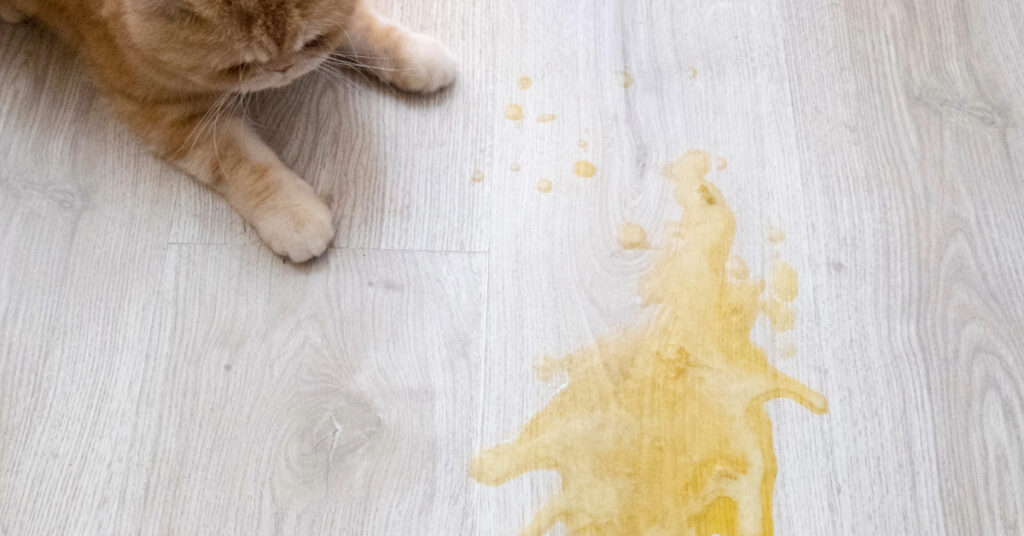
Cat throwing up occasionally can be a normal response to hairballs or eating too fast, but a cat throwing up repeatedly, or showing other symptoms alongside vomiting, is a sign something more serious may be going on. Vomiting is one of the most common reasons Montgomery pet owners bring their cats to see us, and it’s understandable why: cats vomit for dozens of reasons, ranging from completely harmless to genuinely urgent, and it isn’t always obvious which category your cat falls into. At Montgomery Veterinary Associates, we help pet owners sort through exactly that question frequently, and are here to break down what you need to know.
Why Do Cats Throw Up?
Cats have a lower threshold for vomiting than many other species, which means relatively minor triggers can set it off. That said, not all vomiting is equal, and understanding the common causes helps put your cat’s symptoms into context.
Common, Less Serious Causes
- Eating too quickly, which can cause food to come back up shortly after a meal
- Hairballs, especially in long-haired or heavily shedding cats
- A sudden change in diet or a new type of food
- Mild dietary indiscretion, such as eating something slightly off or unfamiliar
- Motion sickness during car rides or travel
More Serious Underlying Causes
- Gastrointestinal parasites, particularly in kittens or cats with outdoor access
- Inflammatory bowel disease or other chronic digestive conditions
- Kidney disease, which is common in middle-aged and senior cats
- Hyperthyroidism, especially in cats over the age of eight
- Pancreatitis, an inflammation of the pancreas that can cause repeated vomiting
- Ingestion of a foreign object, such as string, a toy, or a piece of fabric
- Toxin exposure, including certain plants, human medications, or household chemicals
How Can I Tell If My Cat’s Vomiting Is Serious?
This is often the central question for owners standing in the kitchen at 11 p.m. wondering whether it’s worth a vet visit. A few key factors help separate a one-off episode from a genuine concern.
Frequency Matters
A single vomiting episode in an otherwise happy, active, eating cat is usually not an emergency. Repeated vomiting, more than once or twice in a day, or vomiting that continues over several days, is a stronger signal that medical evaluation is needed.
What the Vomit Looks Like
The appearance of your cat’s vomit can offer real clues. Undigested food shortly after eating often points to eating too fast. Bile (yellow or greenish fluid) can indicate an empty stomach or digestive upset. Blood, whether bright red or looking like coffee grounds, is always a reason to call your veterinarian promptly, as is vomit containing string or fabric, which can signal a dangerous foreign body ingestion.
Accompanying Symptoms
- Lethargy or noticeably reduced energy
- Loss of appetite or refusing food and water
- Diarrhea occurring alongside vomiting
- Weight loss, especially if it’s happened over weeks
- Visible pain, hiding, or reluctance to be touched
- Dehydration, which can show up as dry gums or sunken eyes
If your cat is vomiting and displaying two or more of these symptoms together, that combination is a clear signal to contact Montgomery Veterinary Associates rather than waiting to see if things improve.
When Should I Call the Vet About My Cat Throwing Up?
There are specific situations where a same-day or emergency call is warranted rather than a wait-and-see approach:
- Vomiting more than two or three times within 24 hours
- Vomiting that continues for more than a day, even if infrequent
- Blood present in the vomit
- Vomiting combined with lethargy, appetite loss, or diarrhea
- A known or suspected foreign object ingestion, such as string or a small toy
- Vomiting in a kitten, senior cat, or a cat with an existing health condition, since these groups tolerate vomiting and dehydration less well
How Is Vomiting in Cats Diagnosed?
When you bring your cat in for vomiting, your veterinarian will start by asking detailed questions: how often it’s happening, what the vomit looks like, whether your cat’s diet has changed, and what other symptoms you’ve noticed. From there, a physical exam helps identify pain, dehydration, or abnormalities in the abdomen. Depending on findings, bloodwork, a fecal exam, X-rays, or ultrasound may be recommended to identify the underlying cause, particularly for cats with chronic or recurring vomiting.
Why Getting a Diagnosis Matters
Because so many different conditions can cause a cat to vomit, from something as simple as a diet change to something as serious as kidney disease, treating the vomiting itself without understanding the cause often isn’t enough. A proper diagnosis allows your veterinary team to address what’s actually driving the problem rather than just managing symptoms.
How Is Cat Vomiting Treated?
Treatment depends entirely on the underlying cause identified during your visit. Some cats benefit from a temporary bland diet and supportive care, while others may need medication to manage nausea, treat an infection, or address a chronic condition like inflammatory bowel disease or hyperthyroidism. In cases involving a foreign object or serious blockage, surgery may be necessary. Because at-home treatment without a diagnosis can delay identifying a more serious issue, it’s best to let your veterinary team guide next steps rather than trying to manage frequent vomiting on your own.
Can I Prevent My Cat From Throwing Up?
While not every cause of vomiting is preventable, a few habits can reduce how often your cat experiences it:
- Feed consistent, high-quality meals and avoid abrupt diet changes
- Use slow-feeder bowls for cats who eat too quickly
- Brush your cat regularly to reduce hairball formation
- Keep string, ribbon, rubber bands, and small toys out of reach
- Stay current on parasite prevention and wellness exams, which can catch underlying conditions early
When “Just a Cat Thing” Isn’t Just a Cat Thing
It’s a common and understandable habit to write off cat vomiting as simply part of owning a cat. Sometimes that’s true. But because vomiting can also be the first visible sign of kidney disease, hyperthyroidism, or a dangerous obstruction, it’s worth paying attention to changes in frequency and accompanying symptoms rather than assuming it will resolve on its own. Montgomery Veterinary Associates is always available to help you figure out where your cat’s vomiting falls on that spectrum, and to catch the more serious causes early, when treatment tends to be far more effective.
Partnering With Montgomery Veterinary Associates for Your Cat’s Digestive Health
Every cat is different, and what’s “normal” for one cat’s stomach might be a red flag for another. If your cat’s vomiting has you second-guessing whether it’s worth a call, that instinct alone is usually reason enough to reach out. Our team at Montgomery Veterinary Associates is glad to help you sort through the symptoms and determine the right next step for your cat. Call us today or book an appointment online.