

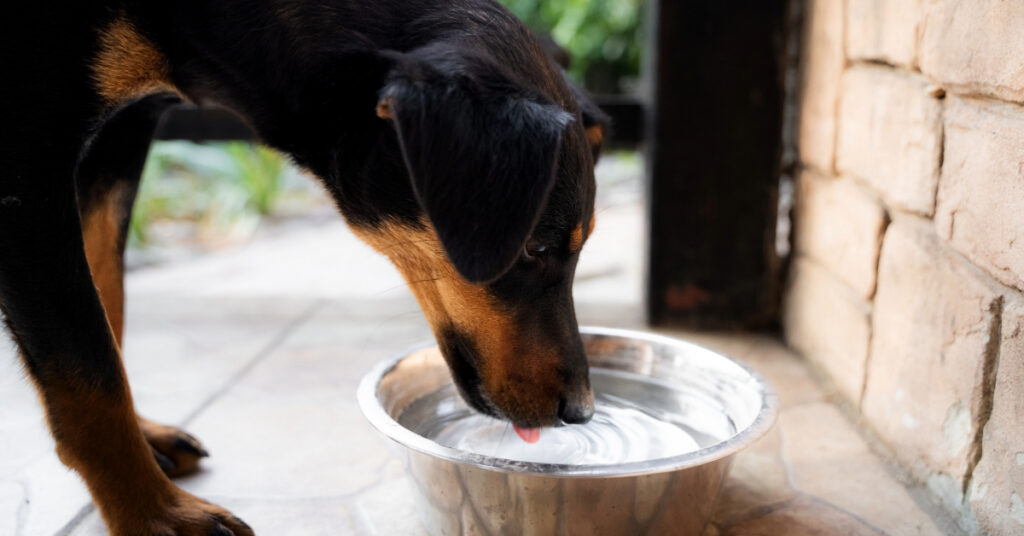
Dog dehydration symptoms include dry or sticky gums, loss of skin elasticity, sunken eyes, lethargy, loss of appetite, and reduced urination, and recognizing these signs early can prevent a mild case from becoming a medical emergency. Dehydration in dogs happens faster than many owners expect, especially during hot Alabama summers or after a bout of vomiting or diarrhea, and it can affect dogs of any age or breed. At Montgomery Veterinary Associates, we want every pet owner in our community to know exactly what to look for, because catching dehydration early makes treatment simpler and recovery faster.
Why Do Dogs Become Dehydrated?
Dehydration occurs when a dog loses more fluid than they’re taking in, whether through inadequate water intake, excessive heat, illness, or a combination of factors.
Common Causes of Dehydration in Dogs
- Hot weather and prolonged outdoor activity, especially during Montgomery’s humid summer months
- Vomiting or diarrhea, which cause rapid fluid loss
- Reduced water intake due to illness, dental pain, or unfamiliar surroundings
- Fever, which increases the body’s fluid needs
- Underlying conditions such as kidney disease or diabetes, which affect fluid balance
- Limited access to fresh water, particularly for outdoor dogs during travel or long days away from home
The 6 Symptoms of Dehydration in Dogs
Recognizing these six symptoms, especially when they appear together, gives you the clearest picture of whether your dog needs prompt veterinary attention.
Dry or Sticky Gums
A hydrated dog’s gums are moist and slick to the touch. When a dog becomes dehydrated, the gums often feel dry, tacky, or sticky instead. This is one of the simplest checks you can do at home: gently lift your dog’s lip and touch a finger to the gum line.
Loss of Skin Elasticity
Healthy, hydrated skin snaps back quickly when gently pinched and released, a check often called the “skin tent test.” In a dehydrated dog, the skin may return to its normal position slowly, or in more significant cases, remain slightly tented. This test is most reliable on the skin over the shoulders or back.
Sunken Eyes
As dehydration progresses, a dog’s eyes can appear noticeably sunken or dull compared to their normal appearance, sometimes with reduced tear production making the eyes look less bright and moist than usual.
Lethargy or Weakness
Dehydrated dogs often show reduced energy, reluctance to move, or a general lack of enthusiasm for activities they’d normally enjoy. In more advanced dehydration, dogs may seem wobbly, weak, or unusually quiet.
Loss of Appetite
A dehydrated dog may show little interest in food, even meals or treats they’d typically enjoy. Appetite loss combined with reduced water intake can create a cycle that worsens dehydration if not addressed.
Reduced or Dark Urination
Watch for infrequent urination, or urine that appears darker and more concentrated than usual. This is the body’s attempt to conserve fluid and is one of the clearer internal signs that a dog isn’t getting enough water.
How Quickly Can a Dog Become Dehydrated?
Dogs can become dehydrated faster than many people expect, particularly in hot, humid conditions or during illness involving vomiting or diarrhea. A dog exercising heavily outdoors on a warm Montgomery afternoon without adequate water breaks can show early symptoms within just a few hours. Puppies, senior dogs, and dogs with existing health conditions are especially vulnerable, since their bodies have less capacity to compensate for fluid loss.
Dogs at Higher Risk of Dehydration
- Puppies, whose smaller bodies lose fluid balance more quickly
- Senior dogs, who may have underlying kidney or health conditions
- Dogs with chronic illnesses like kidney disease or diabetes
- Short-nosed (brachycephalic) breeds, who often struggle more in heat
- Nursing mothers, who have increased fluid needs
When Is Dog Dehydration an Emergency?
Mild dehydration can sometimes be addressed by encouraging your dog to drink and moving them to a cooler environment, but there are situations where dehydration should be treated as an emergency requiring immediate veterinary care:
- Dehydration following repeated vomiting or diarrhea over several hours
- Dehydration accompanied by lethargy so severe your dog won’t stand or walk
- Signs of heatstroke, including excessive panting, drooling, or collapse
- A dog who refuses water entirely for an extended period
- Dehydration in a puppy, senior dog, or dog with a known chronic illness
If you’re seeing any of these combinations, don’t wait to see if your dog improves on their own, contact Montgomery Veterinary Associates right away.
How Is Dehydration in Dogs Diagnosed and Treated?
When you bring in a dog showing signs of dehydration to Montgomery Veterinary Associates, your veterinarian will perform a physical exam, checking gum moisture, skin elasticity, and overall condition, and may recommend bloodwork to assess how significant the fluid loss is and whether an underlying illness is contributing. Treatment ranges from encouraging oral fluids in mild cases to administering subcutaneous or intravenous fluids for more moderate to severe dehydration. Because at-home rehydration attempts aren’t always sufficient once dehydration has progressed, professional evaluation ensures your dog gets the right level of care.
Tips for Preventing Dehydration in Dogs
- Provide fresh, clean water at all times, both indoors and outdoors
- Bring water and a portable bowl on walks, hikes, or car trips, especially in warmer months
- Limit strenuous exercise during the hottest parts of the day
- Watch for early signs of illness that could reduce water intake, such as dental pain or nausea
- Monitor senior dogs and dogs with chronic conditions more closely, since their needs may be higher
Making Hydration a Habit, Not an Afterthought
Dehydration in dogs is one of those issues that’s genuinely easy to prevent but can escalate quickly if it’s missed. Building small habits, checking your dog’s water bowl daily, bringing water on outings, and knowing the six symptoms above, gives you a real head start on catching dehydration before it becomes serious. If you’re ever unsure whether your dog’s symptoms point to dehydration or something else, Montgomery Veterinary Associates is here to help you check, and to get your dog back to feeling like themselves. Call us today or book an appointment online!