

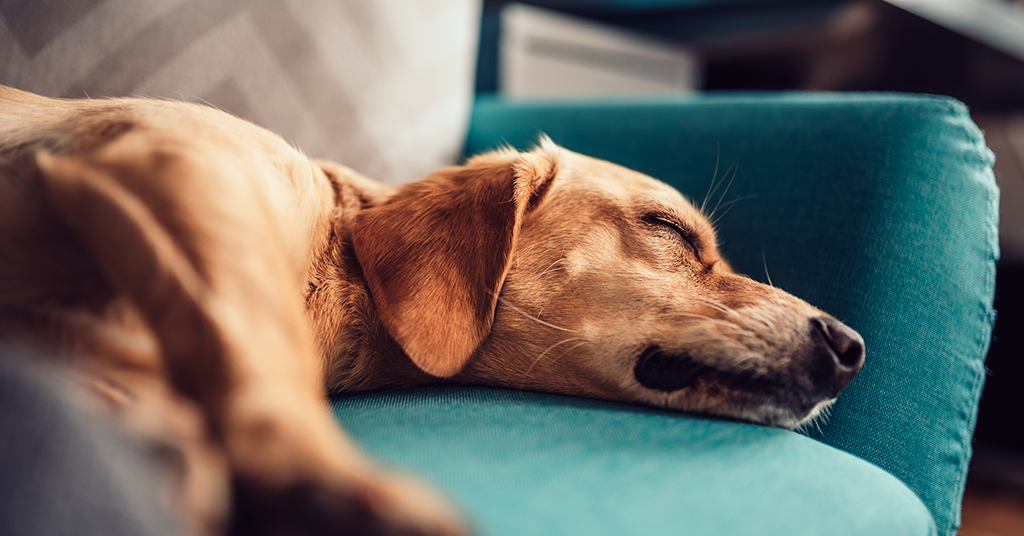
Dog snoring happens when air moving through your dog’s nose or throat meets a partial blockage, causing the soft tissues in the airway to vibrate during sleep. Loud snoring is often harmless, but it can also point to excess weight, allergies, an airway structure problem, or another health issue that deserves a closer look.
Plenty of dogs snore occasionally, especially after a busy day or when curled up in an awkward position. Still, a sudden change in volume, snoring that comes with breathing trouble while awake, or noisy sleep in a young dog can signal something more than a quirky habit. At Montgomery Veterinary Associates, owners often ask us whether their dog’s nighttime noises are normal. This guide walks through why dogs snore, what’s happening inside the airway, which factors make it worse, and how a veterinary visit can help you find answers.
Do You Know Why Your Dog Snores?
Most dogs snore because something narrows the airway while they sleep, and the reason can range from simple sleeping posture to a lifelong anatomical trait.
When dogs fall into deep sleep, the muscles in the throat and soft palate relax. Relaxed tissue sags slightly into the airway, and each breath makes it flutter. That fluttering produces the familiar rumble many owners hear from the couch or the foot of the bed.
Occasional Snoring Versus Persistent Snoring
Occasional dog snoring tends to come and go. Your pup might snore after a long hike, while sleeping on their back, or during allergy season, then sleep quietly the rest of the year. Persistent snoring is different. It happens nearly every night, may get louder over time, and sometimes shows up alongside other changes in breathing or energy.
Paying attention to patterns gives your veterinarian helpful context. Consider whether the snoring is new, whether it happens in every sleeping position, and whether your dog breathes noisily even while awake. Those details help separate a harmless habit from dog snoring linked to an underlying condition.
Is Loud Snoring Ever Normal?
For some dogs, yes. Certain breeds snore loudly simply because of how their heads and airways are shaped. Even so, “normal for the breed” doesn’t always mean “nothing to worry about,” since those same features can make breathing harder in hot weather or during exercise. A baseline exam helps you understand what’s typical for your individual dog.
Age can also play a part. Puppies rarely snore loudly unless they have a breed-related airway trait or a cold, while older dogs may develop dog snoring as muscle tone in the throat changes or weight creeps up. Tracking these shifts over the years helps your veterinarian spot trends early.
What Happens in Your Dog’s Airway During Snoring?
During an episode of dog snoring, air squeezes through a narrowed passage, and the vibration of soft tissue creates sound as your dog inhales and exhales.
Several structures can contribute to that narrowing. The nostrils, nasal passages, soft palate, throat, and larynx all play a role in moving air smoothly to the lungs. When any of them becomes smaller, swollen, or floppy, airflow turns turbulent and noisy.
The Role of the Soft Palate and Nasal Passages
The soft palate sits at the back of the roof of the mouth. In many dogs, especially short-nosed breeds, this tissue is longer than ideal and hangs into the throat, which makes dog snoring more likely. Narrow nostrils or congested nasal passages force a dog to pull air harder, increasing vibration even further.
How Snoring May Affect Sleep Quality
Loud snoring sometimes disrupts a dog’s rest. Some dogs shift positions often, wake themselves up, or pause briefly in their breathing during sleep. Over time, poor-quality rest can leave a dog more tired or less tolerant of activity during the day.
Watch for warning signs that suggest your dog’s breathing needs prompt attention:
- Gasping, choking sounds, or brief pauses in breathing while asleep
- Noisy or labored breathing when your dog is awake and resting
- Gums or tongue that look bluish or gray
- Collapse, fainting, or extreme fatigue after mild activity
- Nasal discharge, nosebleeds, or swelling around the face
Any of these changes warrant a call to your veterinarian, and breathing distress should be treated as an emergency.
What Causes Snoring in Dogs?
The most common causes of dog snoring include breed anatomy, excess weight, allergies, respiratory infections, and physical obstructions in the nose or throat.
Pinpointing the cause matters because each one calls for a different approach. Here are the factors veterinarians see most often:
- Brachycephalic anatomy: Bulldogs, French Bulldogs, Pugs, Boston Terriers, Shih Tzus, and Boxers often have shortened skulls, narrow nostrils, and elongated soft palates that crowd the airway.
- Extra body weight: Fat deposits around the neck and throat can press on the airway and make snoring louder.
- Allergies: Pollen, dust, and mold can inflame the nasal lining. Central Alabama’s long growing season can keep some dogs congested for months at a time.
- Infections: Upper respiratory infections, including some types of kennel cough, can cause swelling and mucus that narrow the passages.
- Dental problems: Infected tooth roots in the upper jaw sometimes affect the nasal cavity and lead to congestion.
- Foreign objects or growths: Grass awns, polyps, or masses inside the nose can partially block airflow and often cause one-sided discharge.
Sleeping Position and Environment
Not every case of dog snoring points to a medical problem. Dogs that sleep on their backs often snore because their tongue and soft palate fall backward. Dry indoor air, secondhand smoke, and dusty bedding can also irritate the airway. These everyday factors usually cause milder, inconsistent snoring rather than loud nightly noise.
When Snoring Starts Suddenly
A dog that never snored before and suddenly starts deserves extra attention. New-onset dog snoring, especially in a middle-aged or senior dog, can indicate a growth, infection, or other change inside the airway that should be evaluated sooner rather than later.
What Can Be Done About Dog Snoring?
The best first step for loud or worsening dog snoring is a veterinary exam, since the right plan depends entirely on what’s causing the noise.
Your veterinarian will start with a history and physical exam, checking your dog’s nostrils, mouth, throat, teeth, and lungs. They’ll also look at body condition and ask about when the snoring happens. Depending on what they find, they may recommend additional diagnostics such as X-rays, sedated airway exams, or other imaging to get a clear view of the nasal passages and throat.
Options Your Veterinarian May Discuss
Once the cause is clear, your veterinary team can talk through options tailored to your dog. These may include a structured weight management plan, allergy management, treatment for an infection or dental disease, or removal of a foreign object. For dogs with significant brachycephalic airway syndrome, surgery to widen the nostrils or shorten an elongated soft palate may be recommended to help them breathe more comfortably.
Questions to Bring to Your Appointment
A little preparation can make your visit more productive. Recording a short video of your dog snoring helps your veterinarian hear exactly what you hear at home. You might also note how long the snoring has been going on, whether it has changed, and whether your dog seems tired, short of breath, or less interested in exercise.
Why Follow-Up Visits Matter
Dog snoring linked to weight, allergies, or airway structure often changes over time, so periodic rechecks give your veterinarian a chance to see whether the current plan is working. Wellness visits also make it easier to catch new problems, such as dental disease or nasal changes, before they affect your dog’s breathing.
To schedule an exam, call Montgomery Veterinary Associates at our Vaughn Road hospital at (334) 271-1003 or our Carter Hill Road hospital at (334) 269-2508.
Helping Your Dog Breathe and Rest More Comfortably
Dog snoring can be a harmless quirk, but it can also be your pet’s way of telling you something about their airway, weight, or overall health. Noticing when the snoring started, how loud it has become, and whether other breathing changes appear gives you valuable information to share with your veterinary team.
Montgomery Veterinary Associates serves dogs and their families across Montgomery and the greater River Region with wellness exams, diagnostics, and personalized care plans. If your dog’s snoring keeps the whole house awake, or if you’ve noticed changes in how your pet breathes, our team is happy to take a closer look. A quick visit can bring peace of mind and help your dog enjoy quieter, more restful nights.