

A hairball in cats becomes more than a minor nuisance when your cat starts retching without producing anything, stops eating, or seems lethargic for more than a day. Those are signs it’s time to call the vet. Most cat owners have stepped over (or onto) a hairball at some point, and for many cats, an occasional hairball is simply a normal part of self-grooming. But hairballs in cats aren’t always harmless, and knowing the difference between a routine hairball and a sign of something more serious can protect your cat from a dangerous blockage. At Montgomery Veterinary Associates, we see cats whose owners assumed a hairball was “just a hairball”, until it wasn’t.
Why Do Cats Get Hairballs?
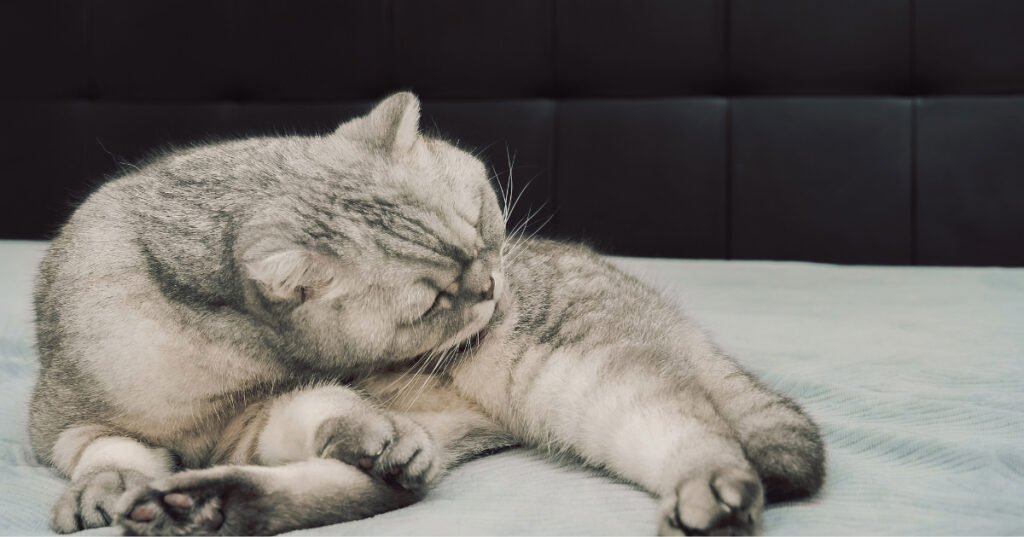
Cats are meticulous groomers, and every time your cat licks their coat, tiny hook-like structures on their tongue called papillae catch loose and dead hair. Most of that hair is swallowed. Normally, it passes through the digestive tract and comes out in the litter box without any trouble. But sometimes hair accumulates in the stomach faster than it can move through the intestines, and your cat’s body responds by vomiting up a hairball, usually a cylindrical, damp wad of fur.
Hairballs in cats are more common in certain situations, including:
- Long-haired breeds like Persians and Maine Coons, who shed more fur into their coat during grooming
- Cats who groom excessively due to stress, allergies, or skin irritation
- Cats experiencing seasonal shedding in spring and fall
- Cats with underlying digestive or motility issues that slow the movement of hair through the gut
How Often Is “Normal” for Cat Hairballs?
An occasional hairball, roughly once or twice a month for most cats, is generally considered within the range of normal. If your cat is bringing up hairballs weekly or more often, that frequency itself is a signal worth mentioning to your veterinarian, even if your cat otherwise seems fine. Frequent hairballs in cats can point to excessive grooming from anxiety or skin discomfort, or to a digestive system that isn’t moving hair through efficiently.
What Does a Normal Hairball Look Like?
A typical hairball is expelled relatively quickly, without much straining, and your cat usually returns to normal behavior right afterward, eating, playing, and using the litter box as usual. The hairball itself is generally tube-shaped (formed by the esophagus) and about one to two inches long, damp with stomach fluid and mucus.
When is a Hairball More Than Just a Hairball?
A hairball crosses from “normal grooming byproduct” into “medical concern” when it signals a blockage, chronic digestive distress, or an underlying illness. Here’s what separates a routine hairball from a reason to call Montgomery Veterinary Associates.
Repeated Retching Without Producing a Hairball
If your cat is hunched over, straining, and making the classic hacking motion but nothing comes up, or only a small amount of foam or liquid, this can indicate that hair or another mass is stuck and unable to pass. Unproductive retching that continues for more than a few minutes, or that repeats several times in a day, warrants a same-day call to your vet.
Loss of Appetite or Refusing Food
A cat who skips one meal after an especially large hairball might just have an upset stomach. But a cat who won’t eat for 24 hours or more could have a hairball or trichobezoar (a compacted mass of hair) causing a partial or full blockage in the stomach or intestines. Appetite loss paired with any other symptom on this list should never be ignored.
Lethargy or Hiding
Cats are experts at masking illness, so noticeable lethargy, sleeping far more than usual, hiding, or seeming uninterested in normal activities, is often one of the clearest signs that something beyond a routine hairball is going on internally.
Constipation or Diarrhea
Hair that isn’t moving properly through the digestive tract can disrupt normal bowel movements in either direction. Straining in the litter box, small or hard stools, or ongoing diarrhea alongside hairball symptoms are worth a veterinary exam.
Abdominal Swelling or Pain
A visibly bloated belly, or a cat who flinches, growls, or moves away when you touch their abdomen, can indicate a blockage that requires prompt veterinary attention, sometimes including imaging or surgery to resolve.
What Causes a Hairball to Become Dangerous?
A trichobezoar, the medical term for a compacted hairball, becomes dangerous when it grows too large to pass through the narrow opening between the stomach and small intestine, or when it lodges somewhere along the intestinal tract. This is called a gastrointestinal obstruction, and it’s a true emergency. Left untreated, a blockage can cut off blood supply to part of the intestine, leading to tissue damage that requires surgical intervention.
Cats Most at Risk for Hairball Blockages
Certain cats face a higher risk of a hairball turning into a blockage, including long-haired cats who shed heavily, cats who over-groom due to anxiety or skin conditions, senior cats with slower digestive motility, and cats with a prior history of gastrointestinal issues. If your cat falls into one of these groups, it’s worth discussing a proactive hairball management plan with your veterinarian at Montgomery Veterinary Associates.
How Are Hairball Blockages Diagnosed and Treated?
When you bring your cat in for hairball concerns, your veterinarian will typically start with a physical exam, feeling the abdomen for any masses or areas of discomfort. Depending on what they find, they may recommend X-rays or an ultrasound to look for a blockage, along with bloodwork to rule out other causes of vomiting and appetite loss. Treatment depends entirely on severity; some cases resolve with supportive care and monitoring, while others require surgery to remove the obstruction. Because outcomes are far better when blockages are caught early, don’t wait if your cat is showing more than one of the warning signs above.
Reducing Hairballs in Cats Long-Term
While you shouldn’t attempt to treat a suspected blockage at home, there are everyday habits that support your cat’s digestive health and may reduce how often hairballs occur:
- Regular brushing removes loose fur before your cat swallows it during grooming, and this is especially valuable for long-haired breeds
- Maintaining a consistent grooming schedule
- Keeping your cat well-hydrated
- Ensuring they’re on a diet appropriate for their life stage all support healthy digestion
- Your veterinary team can also recommend diets or supplements formulated to support hairball control if your cat is a frequent hairball producer
Talk to Montgomery Veterinary Associates About Your Cat’s Hairballs
Every cat parent in Montgomery has dealt with a hairball on the carpet at some point, and most of the time, it truly is nothing to worry about. But when retching becomes repetitive, appetite disappears, or your cat just isn’t acting like themselves, those changes deserve attention. Montgomery Veterinary Associates is here to help you tell the difference between a normal part of cat ownership and a symptom that needs medical care. If you’re ever unsure whether your cat’s hairball is something more, give our team a call, we would always rather examine a cat and find nothing wrong than have an owner wait too long.
Trust Your Instincts About Your Cat’s Health
You know your cat’s normal habits better than anyone. If something feels off, whether it’s the frequency of hairballs, a change in appetite, or a shift in energy, that instinct is worth listening to. Montgomery Veterinary Associates is ready to help you sort out routine grooming issues from genuine emergencies, so your cat can stay comfortable and healthy for years to come. Call us today or book an appointment online!